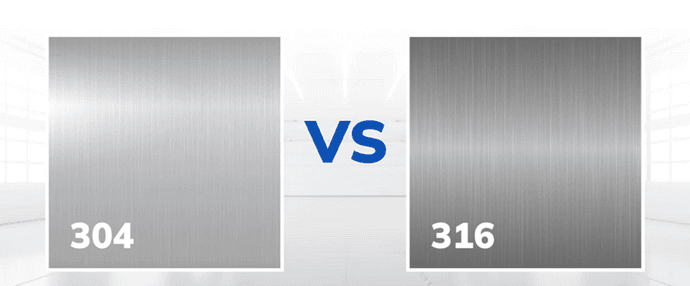
What are the Differences Between Stainless Steel Grades 304 and 316?
Stainless steel grades 304 and 316 are among the most commonly used alloys—but their differences lie in the details. From chemical composition to corrosion resistance, knowing when to use each grade can improve both performance and longevity.
Chemical Composition
-
Grade 304:
-
Contains approximately 18% chromium and 8% nickel
-
Commonly known as “18/8 stainless steel”
-
Lacks significant amounts of molybdenum
-
-
Grade 316:
-
Contains 16% chromium, 10% nickel, and 2–3% molybdenum
-
Molybdenum improves corrosion resistance—especially in chloride-rich environments
-
Corrosion Resistance
-
304:
-
Excellent resistance in most indoor or mildly corrosive environments
-
May show signs of pitting or rust in salt-heavy settings like coastal areas or roadways
-
-
316:
-
Superior corrosion resistance, particularly against chlorides, saltwater, and acidic chemicals
-
Ideal for marine, chemical, and pharmaceutical industries
-
Strength & Durability
-
Both grades are strong, durable, and can handle mechanical stress well
-
316 offers slightly better long-term performance in harsh environments, but 304 is adequate for most general uses
Cost Considerations
-
304:
-
More affordable and widely available
-
Ideal for cost-sensitive projects
-
-
316:
-
Higher price due to molybdenum
-
Worth the investment for extreme environments
-
Typical Applications
-
304:
-
Kitchen equipment, sinks, cutlery
-
Interior architecture: handrails, wall cladding
-
Furniture and general-purpose items
-
-
316:
-
Marine fixtures: boat fittings, docks and water tank ladders
-
Chemical and pharmaceutical processing equipment
-
Medical instruments
-
Magnetic Properties
-
Both are non-magnetic when annealed
-
May develop slight magnetism after cold working
Choosing the Right Stainless Steel Grade
-
Choose Grade 304 for general-purpose applications where corrosion isn’t extreme and budget matters
-
Choose Grade 316 for harsh environments where salt, chemicals, or acidity are present